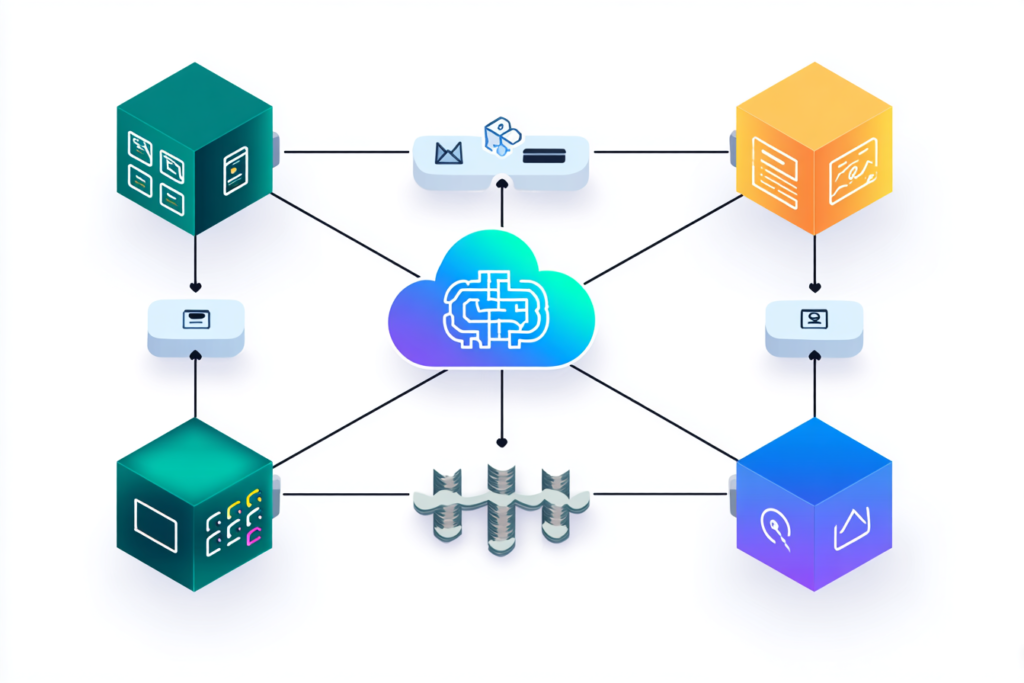
Feature store architecture in real-world machine learning systems
How Feature Stores Work in Machine Learning
A feature store in machine learning is a system used to store, manage, and serve features for models.
In real-world ML systems, features are created once and reused across different models and pipelines.
It helps ensure that the same features are used for both training and prediction.
💡 This improves consistency, scalability, and reliability of machine learning systems.
Why Feature Stores Are Important
In real-world machine learning systems, features are used across multiple models and pipelines.
Without a centralized system, teams often duplicate work and create inconsistencies.
A centralized solution solves this by providing a single source of truth for features.
💡 This ensures that the same feature definitions are used during training and prediction.
How a Feature Store Works
A feature store connects data pipelines with machine learning models.
Here is a simplified flow:
- Raw data is collected
- Data is processed and transformed into features
- Features are stored in a central storage
- Models retrieve features for training
- The same features are used for prediction
👉 This ensures consistency between training and production systems.
💡 It acts as a bridge between data engineering and machine learning.
Key Components of a Feature Store
Feature Storage
Stores computed features in a structured format for reuse.
Feature Serving
Delivers features to models in real time or batch mode.
Feature Registry
Keeps metadata about features, such as definitions and data sources.
Data Processing Layer
Creates and updates features using data pipelines.
💡 These components work together to make features reliable and reusable.
Feast — official feature store framework
Online vs Offline Feature Stores
These systems usually have two parts:
Offline Store
Used for training machine learning models.
Stores large volumes of historical data.
Online Store
Used for real-time predictions.
Provides fast access to the latest feature values.
👉 Both stores must stay consistent to avoid differences between training and production.
💡 This separation allows systems to scale and handle different workloads efficiently.
Real-World Example of a Feature Store
Let’s look at a practical example.
Imagine an e-commerce platform.
Features:
- number of products viewed
- total spending
- days since last purchase
These features are:
- Created in a data pipeline
- Stored in a centralized storage
- Reused across multiple models
- Served for real-time predictions
👉 This allows different models to use the same consistent data.
💡 Without a feature store, teams would rebuild the same features multiple times.
Common Mistakes When Using Feature Stores
Even with a feature store, teams can make mistakes:
❌ Inconsistent feature definitions
❌ Not updating features regularly
❌ Poor data quality
❌ Lack of monitoring
👉 This approach does not fix bad data — it only organizes it.
💡 Reliable features require good data pipelines and validation.
How to Start Using a Feature Store
If you’re just starting, keep it simple.
- Identify important features
- Build feature generation in your data pipeline
- Store features in a database or warehouse
- Reuse features across models
- Add monitoring and validation
💡 You don’t need complex tools at the beginning — a simple structured storage can act as a basic feature store.
👉 As your system grows, you can move to dedicated solutions.
Conclusion
A feature store is a key component of modern machine learning systems.
It helps teams manage, reuse, and serve features consistently across pipelines and models.
💡 The main benefit is reliability — the same features are used everywhere.
👉 If you want scalable and production-ready ML systems, using a feature store is a big step forward.
FAQ
What is a feature store in machine learning?
A feature store is a system used to store, manage, and serve features for machine learning models.
Why do we need a feature store?
It ensures consistency between training and prediction and allows teams to reuse features.
What is the difference between online and offline feature stores?
Offline stores are used for training, while online stores provide real-time features for predictions.
Is a feature store part of data engineering?
Yes, it connects data pipelines with machine learning systems and is closely related to data engineering.
Do beginners need a feature store?
Not necessarily — simple storage solutions can act as a basic feature store at early stages.